
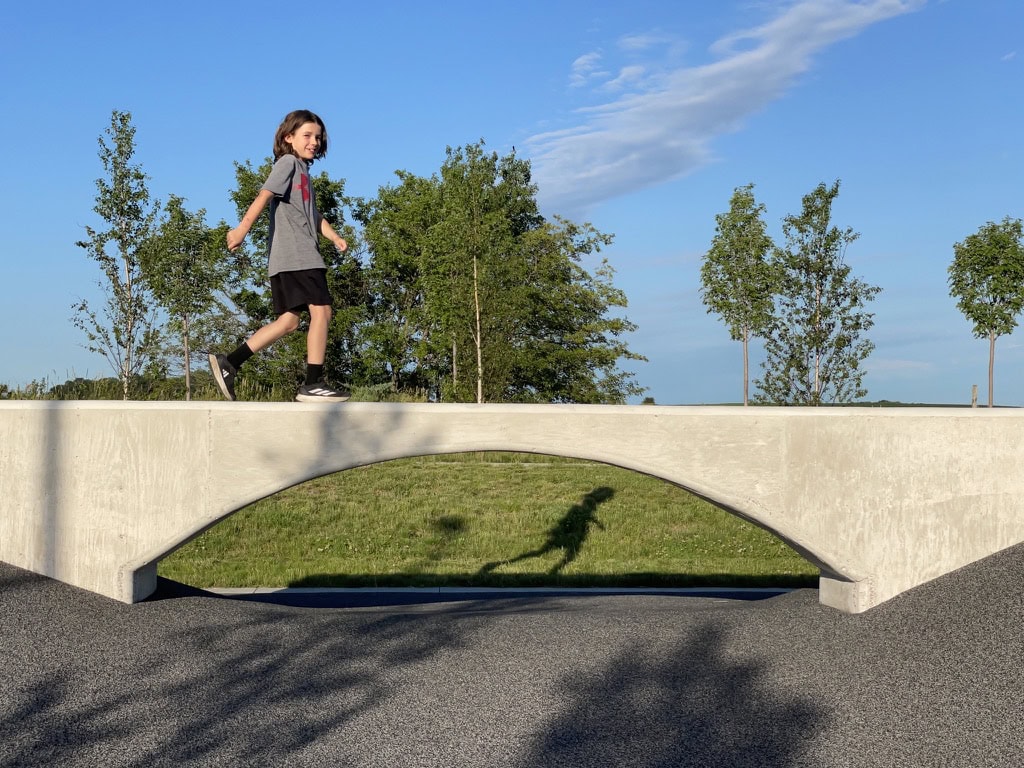
You Don’t Need a New Phone. You Just Need to Learn to See.
There’s a joke among photographers about how many times they hear someone say, “That’s a really good picture. You must have a good camera.” Photographers get plenty of gear envy from each other, too.
Let me tell you, that same gear envy extends to the newest smartphone. Right after a new one drops, you can expect a line outside the Apple Store.
Your smartphone camera is fine
A photo that stops someone mid-scroll has very little to do with the camera that took it. Photography literally means recording light. Add great composition, emotion, and storytelling, and your photo will be a winner. Not every photo you take has to be awesome. (Mine sure aren’t.) Still, every photo you take can teach you something that makes your photography a bit better with every frame.
It really doesn’t matter how good your gear is, whether it’s a phone or a fancy mirrorless camera. It’s about learning to see. It’s about taking the time to slow down and look. I’m still rocking my iPhone 12 as I write this. But if I want higher-resolution photos with even more control over the outcome, I’ll admit I pull out my big camera.
Most of the time, when I’m hiking with my family or taking a trip to the local water park, I’ll just pack my phone. That’s more rugged and portable. It’s light, I’m not stressing about editing later, and it keeps me in the moment instead of hiding behind gear. The best camera really is the one you have on you, but that only takes you so far if you never learned what to do with it.
Hand two people the same phone and you’ll get two very different sets of photos back. We all see differently. When we learn how to look, some of those differences become extra compelling to the people viewing their photo gallery. (Yes, professional photographers have taken MANY classes in their craft. And they keep practicing and refining every day.)
Seeing is a skill, and you can learn it
Photographic seeing means noticing where light lands and what it does to whatever it’s touching. It means knowing your lens doesn’t see space the way your eyes do. It means reading the frame before you tap, so you’re making a choice instead of just recording whatever happened to be there.
None of that comes in a software update. It comes from practice.
Try this. Before your next photo, stop and look for the light. Is it harsh or soft? Is it hitting your subject from the front, the side, or from behind? What are the shadows doing? Can you find any reflections?
Taking the time to slow down and really study your surroundings will improve your photos faster than any gear upgrade. Once you start noticing light, I’ll bet you won’t be able to turn that part of your brain off. You might start noticing the little mundane things and seeing more beauty. The ugly pipe on the wall becomes incredibly interesting in the right light when cropped in close. The blinds throw stripes of light and shadow across a chair, and that extends to the wall, becoming a zigzag. Someone you love is focused on their work, and soft light bounces on their face. It becomes a meditation. It becomes a study in beauty and gratitude. A regular Tuesday turns into something you’ll look back on with a smile.
Expressions bring life to the photo
One of my favorite phone tools is burst mode. I use it while my kids splash in the water or when my dog runs toward me with her tongue flapping out of the side of her mouth. Later, when I cull through my gallery, I find expressions and photos that I would never have caught by tapping the shutter once and crossing my fingers. There is always a split second where the frozen time becomes a gorgeous moment that makes me smile each time it reappears on my photo shuffle lock screen. It’s the expressions made of genuine joy when all thoughts of performing for a camera are gone.
The phone gave me options, but I still had to be paying attention. I had to see the moment building and press the button before it peaked. Burst mode means I get to keep more of what I noticed. It can’t do the noticing for me.
The upgrade you actually need
If you’ve been holding off on learning photography until you have better gear, look at what the wait is costing you. Photos you never took because the light looked dim or the room was a mess or the moment seemed too ordinary (hint: it wasn’t any of those things). The faces your kids make before they remember you’re watching. Content you never made. Memories that stayed in your head and never became something you could hold.
The upgrade that changes your photos isn’t in a store. It’s learning to see what’s already in front of you, and trusting yourself enough to take the picture. Anyone can learn it. Creativity is in every child. It’s something that never disappears – it just needs the rust scraped off of it now and then.
That’s what my phone photography workshops and walks are for. No fancy gear is required, and the content naturally adapts to the people in the room as we go because I treat these classes like a conversation, so no two are ever exactly the same. Bring your questions, your curiosity, and your willingness to try.
Want to learn to see? Head to the Phone-tography page and find a time that works for you. Not sure it’s the right fit? Say hi and we’ll figure it out.